Friday, May 4, 2012

Culture Shock

By: Ludonis Maule
Ludonis Maule is a senior at Baruch College majoring in Entrepreneurship Management with a minor in Spanish. She has worked at Baruch College’s Study Abroad Office for the past three years where she advises students on their study abroad options and procedures, she has also coordinated several of the office's Study Abroad Fairs. This spring 2012 semester she is interning at InteRDom in the Marketing department.


Culture shock is a common occurrence affecting individuals studying abroad. It is important to prepare before you leave so that you are not caught off guard. Included below are suggestions for dealing with culture shock after you have arrived in the host country.

Pre-departure
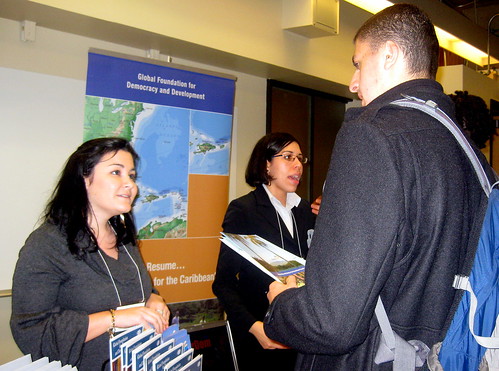

  • Read books, magazines, newspapers and watch television shows to begin to familiarize yourself with the country and its culture

  • Speak to students who have gone to this country, as well as natives

  • Attend study abroad information sessions and pre-departure orientations if available


Arrival

  • Observe your surroundings, explore your immediate environment, try new foods

  • Try to not only observe cultural differences, but ask questions to try to understand WHY those things are different

  • Keep a journal

  • Contact your family and friends. Usually some knowledge of what’s taking place back home doesn’t make you feel as if you are left out.

Adjusting
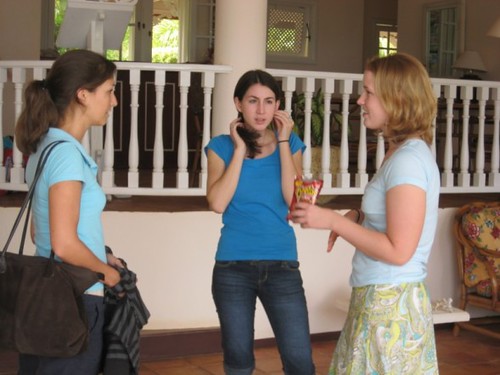

  • After the arrival and observation process you should have settled in fairly well

  • Try making friends with natives in your class or other students on the same program as you

  • Explore more of the country with friends or on excursions available through the program

  • Try more foods and attend cultural activities.

  • This is your time to speak more of the language of the country, even if you are feeling insecure


Pre-Departure/Re-entry
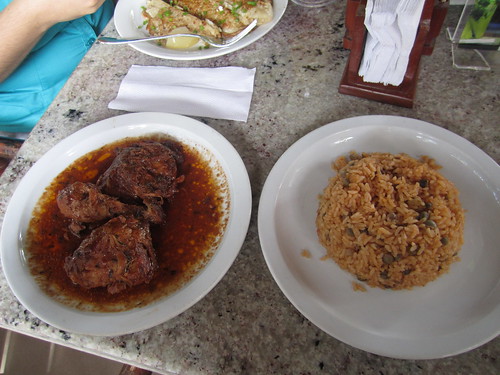

  • Visit your favorite restaurants and attractions before you leave

  • Update your journal

  • Attend Fairs and Information sessions to assist prospective students

  • Keep in contact with the friends you made while abroad


The Caribbean should be one of your top study abroad choices; there is no doubt that you would have a life changing experience. Keep in mind that other persons are always eager to hear about your study abroad experiences, so don’t be afraid to get involved with organizations or activities on campus after you return home to share them.

Friday, April 27, 2012

Why the Caribbean?

By: Ludonis Maule
Ludonis Maule is a senior at Baruch College majoring in Entrepreneurship Management with a minor in Spanish. She has worked at Baruch College’s Study Abroad Office for the past three years where she advises students on their study abroad options and procedures, she has also coordinated several of the office's Study Abroad Fairs. This spring 2012 semester she is interning at InteRDom in the Marketing department.


Choosing a study abroad destination can be a challenge; and you may ask yourself, "why the Caribbean?"

The Caribbean is commonly known for its impeccable scenery and beaches, however it is important to note that there is more to offer. The Caribbean has a culturally rich history to be enjoyed; the variation in languages and accents are also interesting to observe.


The first colony of the Americas, Christopher Columbus touched down in the Dominican Republic before any other shore, and established the first city and the first university—among other things—in the “New World.” The historical heritage and colonial history are still obvious in the country today—from architecture to cultural identities to race relations. A country rich in culture, the DR occupys two thirds of the island Hispaniola, which it shares with Haiti. Its booming tourism industry has made it a popular tourist attraction, but few people are aware of the accelerated economic development that the nation has experienced over the last 10-15 years. Its metropolitan areas are expanding and opportunities abound for students to make a contribution to the growing businesses looking to branch out into new areas and industries.


According to Dominicana Online, the country welcomes over three million visitors per year to its shores and it is known as the leading tourist destination in both the Central American and Caribbean region. With a variety of tourism models—from all-inclusive hotels to small boutiques to more sustainable eco-tourism initiatives—it is the perfect place for a student of tourism to study an industry leader. In addition to tourism, there are other sectors of the Dominican society which are appealing for students, including but not limited to: ecology and the environment, public health, urban planning, international relations, business and insurance.

Sports fanatics are not excluded. The Dominican Republic has also made a name for itself in the Baseball arena, with more Dominicans in Major League Baseball than any other nation outside of the United States. The Dominican Republic hosts baseball academies for dozens of teams and represents the Latin American recruitment hub for teams and the MLB headquarters alike.


The Dominican Republic offers an array of study and professional opportunities to students of virtually any area, so you should have no trouble finding an internship in your area of interest while immersing yourself in its unique culture.

Thursday, April 19, 2012

The Punta Cana Community

By: Anna Groesser
Graduate and Gap Year 32-week Program, 2012
You can read about Anna's internship with Grupo PUNTACANA on the InteRDom website here.

I’m now at the halfway point of my eight-month internship here in Punta Cana and there’s so much to talk about! For starters, I’d like to remark on the friendliness of most every employee I come in contact with on the hotel property. When I leave my casita in the morning and walk to the employee cafeteria, I probably pass on average about ten different employees, and it is extremely odd if even one does not look me in the eye and say hello or good morning. I am wearing my employee badge, so they know I am not a guest, and there is no need to try and impress me, yet they still give a hearty greeting. I am struck by this, even after living here for four months.


Right now, there’s a tranquil, humid rain coming down outside and as I listen to the sound, it reminds me of the current changing seasons. When I arrived, I felt it was quite warm and humid, but it has actually gotten more humid as the months have moved past the winter season. Being from Northern Michigan, I am dreading the hottest months of the year- July and August- but luckily I have AC in my casita as well as the office, so I know it could definitely be worse!


I was thinking I’d mention some things I do for fun, since I haven’t really talked about that. I’ve been here for a few months already and have made a small group of friends who are scattered throughout the Punta Cana region. I have a Dominican friend who works the reservation phone for Tortuga Bay (the luxury boutique hotel here) who I met on the bus going to Santo Domingo one weekend. I also am friends with the two local Peace Corps members who live right in the heart of the nearby Verón community. I’ve got random friends I see at the office during the day, and ones I eat lunch with Monday through Friday, plus the front desk hotel staff who I talk to quite often (as I spend a lot of free time in the lobby, using the wireless Internet). Anyway, for fun, I find myself visiting a nearby theater to catch a recent flick, or spending a weekend afternoon on the beach with a Peace Corps member or two, or organizing a group dinner at a friend’s casita or simply spending time alone, studying Spanish and watching movies on my computer. Sometimes I visit one of the jungle lagoons here for a quick swim, or I meet up with one of the Peace Corps volunteers in Verón (and I can really see how good I have it living at the hotel, since Peace Corps members live at the same income and lifestyle quality level as the locals!) There are a variety of hobbies I can take up here too- I can learn to dive at the dive shop and help them hunt the invasive species Lionfish in the coastal area, I can help at the PUNTACANA Ecology in one of their sustainable resources projects or I can spend a day volunteering at a local orphanage.

As for my work activities, these are just as varied as my free time activities. Specifically, one recent activity was extremely fulfilling- I spent a week with a large group of doctors and medical students and we set up makeshift clinics in the local community, and simply treated people as they came. I did a lot of patient flow management because we had to keep the huge crowd (plus the numerous kids underfoot) from milling about too much, wandering into different sectioned-off areas to curiously watching the examinations! I’ve also been working on the creation of a few different webpages for the PUNTACANA Foundation, and I am learning the public relations-related steps we need to take before these websites can be made official, since it represents the hotel corporation’s image. And just recently, I co-managed a group of VIP tourists from the U.S. for a couple hours. They were interested in seeing the free local clinic and one of the local schools that the PUNTACANA Group created. This was a lot of fun, since it involved my direct supervisor Margarita and I acting as a close-working team during the tour, and we both received a hearty applause at the end as the group thanked us for our leadership that day!

Friday, April 13, 2012

Employability

By: Ludonis Maule
Ludonis Maule is a senior at Baruch College majoring in Entrepreneurship Management with a minor in Spanish. She has worked at Baruch College’s Study Abroad Office for the past three years where she advises students on their study abroad options and procedures, she has also coordinated several of the office's Study Abroad Fairs. This spring 2012 semester she is interning at InteRDom in the Marketing department.


Most employers appreciate students who are engaged in other positive activities outside of academics. International academics or work experience is also very appealing to employers. This international experience will be more valuable to a firm which operates worldwide. More than likely, you will have some knowledge about another country’s culture which may be useful for business. This increases your marketability as an employee.

A Global HR News study revealed that nearly three in four (73%) HR executives cited study abroad as an essential element when evaluating the resume of a potential job candidate for a junior-level position. According to Experience Inc., studying abroad is valued by employers because the individual is viewed as being:
  • Culturally aware

  • Flexible and tolerant

  • Sensitive to and accommodating of other cultures

  • Independent and Mature

Based on this information, an individual who studied abroad is already attributed qualities from the international experience listed on his/her resume even before they sell themselves verbally in the interview. This study abroad experience can be listed several places on your resume. It can be placed under educational experience including the school you attended, its location along with any course work completed. If the program has an internship component it can be listed under work experience.

Once your study abroad experience has been placed on your resume, you should be prepared to speak about it in an interview. Some interviewers will ask about it directly but others may not. However, you should try to incorporate your time abroad, the skills you acquired, the lessons you learned and the cultural sensitivity you developed into the interview in some way. It is important to emphasize that you did not just go overseas to have a good time, but you learned important things that are applicable to your professional life. For example, learning to think outside of the box, consider new and different viewpoints and be more independent and/or work in a team are all important skills you may have developed while abroad which should be emphasized.

As we all know, a great command of a second language is becoming even more vital to the globalized business world. Hence, the opportunity to study and speak the native language of another country should be seized in order to increase your professional marketability. While learning and practicing the language, you are inherently immersing yourself in a country’s culture. This is another reason why studying abroad is important; one has a better chance of experiencing and understanding a culture at its fullest when they are entirely immersed. We tend to be more appreciative and more open minded when we experience other cultures first-hand.

Studying abroad is not only a cultural experience, but it provides you with qualities which, if marketed properly, can be a major attraction for future employers.

Tuesday, April 3, 2012

From a Dream to a Reality

by: Amber Brookmire
Amber Brookmire studies Anthropology at The City College of New York. She hopes to participate in InterDom’s service-learning program this June to further develop her cross-cultural studies and improve Spanish language proficiency.


I first heard about the InteRDom service-learning program through The City College Study Abroad Office. I had always wanted to study abroad during college, but I didn’t think it was a financial possibility for me. I began to research more information and was amazed by all that I could gain, personally and academically, from the Dominican Republic service-learning program. As a senior, I realized this could be my last chance to have this experience. So, I sat down with the advisers in the Study Abroad Office to discuss financial aid and scholarship opportunities. I left their office with various scholarship applications and lots of encouragement, confident that my dream could become a reality.


The combination of homework, applications and work was difficult to manage at first, but I made a clear checklist of what needed to be done and prioritized by deadlines. I also made sure to attend one of InteRDom’s information sessions in the Study Abroad Office on campus, which was very helpful for completing my application. Mandy, a representative of InteRDom, gave a presentation that highlighted the different aspects of the program. I gained a better understanding of the application process and what to expect from my experience abroad. I also learned more about the classes I would be taking and the specific internship project I would be a part of – sustainable urban agriculture! I was very excited to find out that the internship is tailored to each student’s skills and interests.

Ana and Jenny, two students who participated in the program last summer, were also at the meeting to share their experiences and answer questions. It was nice to hear about the experience from a peer’s perspective because it gave me a sense of what the program will be like as a student. I had a chance to chat with them after the presentation and their enthusiasm was truly inspiring. I was glad to have attended the info session because it was very informative and gave me an opportunity to ask questions and discuss my concerns.

I anticipate that the program will be an exciting opportunity to develop useful skills and learn in a unique way. I believe that cross-cultural immersion is an important part of shaping character. If I am able to participate in the program, I am confident that it will be both personally and academically beneficial.

Friday, March 30, 2012

Preparations

By: Ludonis Maule
Ludonis Maule is a senior at Baruch College majoring in Entrepreneurship Management with a minor in Spanish. She has worked at Baruch College’s Study Abroad Office for the past three years where she advises students on their study abroad options and procedures, she has also coordinated several of the office's Study Abroad Fairs. This spring 2012 semester she is interning at InteRDom in the Marketing department.

Imagine waking up to warm, beaming sunshine rays, fresh morning breeze and the sound of the waves beating against the shore. You hurry out of bed, get dressed and head to school. This is the first day of classes and your internship. You met some of your classmates at the program's orientation a few days ago, the excitement you feel reminds you of your first day of college all over again.

On your way through the school’s gates you are greeted by your new friend who offers you breakfast prepared by her mother. You both hurry to class to begin your first day at school; this should be a great. This could be the beginning of the paper you write recounting your perfect study abroad experience.

Studying abroad is a valuable and fulfilling part of college life. It is not only a great asset to your marketability as an employee, but it also gives you the opportunity to experience academic life in another environment while immersing yourself in a foreign culture.

In order to make this experience a success, planning is vital. This process can take up to a year depending on the length of your study abroad program. One of the first and perhaps the most critical step in the planning process is deciding what are your main reasons for wanting to study abroad. These are a few things which can be taken into consideration when determining your reasons for studying abroad.
• Major or field of concentration
• Career goals
• Language ability
• Cultural/Heritage connection

You can begin your search for the ideal program on your school's website or office, most schools have study abroad or International Education offices which you should visit to get more information about the procedures and policies at your school.The Study Abroad/ International Office should also be able to provide you with information about scholarships offered through your school. National scholarships are available for study abroad purposes; with a little research, you should find scholarship information which will be helpful. Another way to obtain information about studying abroad is to visit academic campus fairs. Many schools have going/study abroad fairs or International Education weeks where you can obtain information about opportunities readily available to you. In many cases, they may even have individuals who went on various programs at the fair. This is a great opportunity for you to get first hand information from an actual recipient.

Obtaining college credits may be just as important for some as is financing. It is of utmost importance that you find out from the respective office at your school, the procedure of obtaining credit for your study abroad. You want to ensure that the credits or grades you receive will be included on your transcript when you have completed the program.

Deciding your reasons for going abroad, visiting the respective offices at your school and doing some online research provides the surety that you are well on your way to planning a life changing study abroad experience.

Monday, March 5, 2012

Service Learning Opportunities Grow

Once again this summer students from the City College of New York, as well as students in the whole CUNY system, will have the opportunity to participate in a service learning academic program in the Dominican Republic. Check out the beautiful artwork on the poster announcing the program! For more information, including a downloadable application, copy and paste this link into your web browser: http://www.interdominternships.org/summerprogram/summer01.asp


Thursday, February 9, 2012

Adjusting to Life in Santo Domingo

By: Anna Groesser
Graduate and Gap Year 32-week Program, 2012

You can read about Anna's internship with Grupo PUNTACANA on the InteRDom website here.


I have been living in Santo Domingo for about one month now, and luckily arrived during their “dead of winter” season. To them, this means comfortable breezes and temperatures in the mid-80s. To me, coming from Northern Michigan, this is the height of summer! That being said, you can be sure I have enjoyed the temperatures while my friends and family in Michigan freeze. Honestly, my past month has been pretty relaxed. I’ve focused on getting adjusted to daily activities- for example, weekly shopping and visiting the local colmado for avocados and bananas (or catching the seller who passes through the street every day at 10am, and buying them from his cart). I’ve also toured some of the areas of Santo Domingo and have been slowly practicing my Spanish with strangers and friends (especially those helpful sentences such as “Can you say it with simple words?” and “A little slower, please.”)

Something interesting: after having been in Santo Domingo for only one week, I had experienced more culture shock than in my entire year studying in Tokyo. I attribute it to the fact that the Dominican Republic is not simply a foreign country to me, but also a developing country and a far cry from what I am familiar with back in the U.S. It’s a developing country, yes, but it’s also a busy, thriving and lively place. People are everywhere, things are going on everywhere, trash is everywhere. The streets are narrow and sidewalks are often non-existent. There is so much to look at and compare here. The driving is treacherous and sellers swarm cars at stop lights selling knickknacks, fruits and flowers, or trying to clean windshields. But on the other hand, the pace of “getting things done” in offices and banks and cellphone branches is often frustratingly slow. This is a city of extremes.
The FUNGLODE building is directly across from my apartment building. Their facility is high-tech and impressive, with Dominican security guards in evidence at all times of the night and day. FUNGLODE often hosts political and academic activities and during those evenings, the street below is full of cars looking to park (and lots of honking, to hurry each other along!) A few times a week, the president of the Dominican Republic visits FUNGLODE, and that’s always exciting to me.

My Spanish teacher was a confident and interesting Dominican Spanish language professor. We focused on speaking and listening mostly, as my reading and writing far exceed the former, and she gave me a birthday present on our last lesson day (a wind chime, perfect for my breezy and spacious 5th floor apartment). I hope in a few months to reconnect with her, due to her strong interest in community development within Santo Domingo.

The next phase of my time here entails me moving to Punta Cana in a few days to begin my development internship with Grupo PUNTACANA. I will be interning within two projects- one the creation of a local elementary school and the other in the improvement of a local high school’s computer lab. This is exactly what I went to graduate school for and I can finally experience these things in real life, and not as solely theoretical 20-page paper projects!

Monday, January 23, 2012

Perspective Matters

By: Sydney Valerio
Summer Institute for Educators

Summer 2011

Sydney Valerio is an adjunct professor at Fordham University's School of Education. She also teaches high school English in the New York public school system. Of Dominican descent, her participation in the field portion of the PIER's Summer Institute for Educators in July 2011 was particularly poignant because of her roots on the island of Hispaniola.

As I climbed out of the taxicab and walked onto Santiago’s Calle del Sol, the Romantic gods found it very amusing to have a summertime shower come down on me. This historic street and city had witnessed the transformation of my being during many summers of my youth and now, as I dipped into its busy streets for some last minute photos and shopping before my evening flight, I knew that the skies of the Dominican Republic were speaking to me. Naturally, my Romantic inclinations appreciated nature’s ability to reflect my inner emotions. As the gumdrop-sized rain drops began to fall on my chest and resonate with the beatings of my heart I walked through these very familiar streets looking out for moments in which my camera would be able to capture the images I needed to feature in my project. As the universe would have it, the darkest of clouds dimmed the streets and squeezed torrential volumes of rain onto this ‘street of the sun’ forcing me to find refuge in a storefront along with other pedestrians. What followed could only be described by Paolo Coehlo’s phrase, ‘maktub’. It was written and the universe had conspired to make things happen for me. Those six hundred seconds that followed allowed for me to witness exchanges between store owners, customers, and those of us who only sought refuge. We all represented distinct purposes and backgrounds. Specifically, there was a young Haitian woman who was carrying a basin filled with toasted peanuts. Even her journey had been brought to a halt by the pitter patter of raindrops on her merchandise. Undoubtedly, the coincidence of our coming together had only transpired because of the inclement weather. All I could do was stare at her face and the nonverbal cues she communicated with her eyes. We were clearly, to one another, two women on a mission and reflections of our disparate worlds. Though we didn’t know each other’s languages we shared a smile and a nod of accordance that clearly stated: “This rain has derailed us!” As we held this silent conversation through our gazes a loud horn coming from a tractor-trailer sized Coca Cola truck interrupted our next move. This vehicle was having difficulty making a turn onto the colonial-sized street. All I could think at that moment, other than the irony of that situation, was about how much my perspective had transformed over the past decade of my life in which I had entered adulthood in a pre and post 9/11 world. A decade in which the homogeneity of being a Latina in the Bronx was distinctly redirected and redefined as I moved into different regions of New York for my educational and professional endeavors. More recently, my perspective had been influenced by my educational journey over the past two weeks.

The New Haven portion of the Yale/NYU Colonial Latin America Institute created the necessary foundation from which to develop my unit, “Perspective Matters”. The participants and lecturers developed my thirst for knowledge about Colonial Latin America. As a high school English teacher in a New York public school I knew I’d have to develop a unit that developed the skills assessed in the New York State Regents exam. In my decade of teaching I have found success because of my ability to relate the curricular material to the lives of my students in a very Constructivist manner. I knew that I wanted to feature Junot Diaz’s Pulitzer winning novel in my unit because of its compelling connecting effect. In order for my students to comprehend any excerpt of this novel they would have to develop their perspective and explore Dominican history and Latino identity. I must admit that my motives were clearly connected to Gardner’s Cultivation Communications theory in which he claims that as a society we define certain aspects of society based on the media images we consume rather than our first-hand, sometimes limited, experiences. While at New Haven, I selected Diaz’s excerpt as the main focus of his activity both because of the series of images that were at the center of the piece and because I knew that I would be able to capture these images firsthand the following week during our trip to the Dominican Republic. I was also very excited to select Diaz’s excerpt because of the large representation of students of Dominican descent in my school. I knew that their perspectives would contribute immensely to our discussions.

The moment I stepped foot on Dominican land I knew that my week in that country would be transformative. The itinerary created by the InteRDom team was full of a variety of visits, lectures and panels that promised to take my project to the next level. Every day’s theme nourished a part of my essence as a teacher and Latina of Dominican descent. Every visit and every guide through historical landmarks created windows for me to look through and use in the future. In specific, the day we spent at Altos de Chavon provided an amazing workshop and tour of the site’s museum and grounds. While visiting the Colonial Zone and the site of the first sugar plantation in Boca de Nigua I certainly understood the power my students would access through this project and their study of Diaz’s literature, Dominican history, and global society. I am currently working on developing the stage from which my project will be taught in all of my tenth and eleventh grade classes. I certainly look forward to the exploration and possible conquest.

Tuesday, December 6, 2011

CDN Brings More than just Baseball Broadcasts to Dominican Fans

By: Chris Martinez
InteRDom Intern Fall 2011
InteRDom Experience Series Article #4

Christine Martinez studies Global Studies with minors in journalism and Spanish at San Jose State University in San Jose, California. She is participating in InteRDom's Fall 2011 Academic Semester, taking courses at a local university and carrying out a research project specially structured for her by InteRDom staff on the business of baseball in the Dominican Republic. The articles that she produces will be published on this blog under the tag "InteRDom Experience Series." To read more about Chris' experience with InteRDom in the Dominican Republic, read the InteRDom Experience Series on the InteRDom webpage.

There’s a sign in the CDN studios in Santo Domingo, Dominican Republic, that outlines the channel’s mission statement. At the top of the mission statement is CDN’s motto: the national leader in news.

CDNs an important local channel in the Dominican Republic, not just for news but for sports broadcasting. CDN holds exclusive rights among local channels for Major League Baseball and Liga de Beisbol Profesional de la Republica Dominicana (Dominican Professional Baseball League) broadcasts. The channel has a big responsibility to bring the favorite sport to citizens on television.

CDN sports producer Ambiorix Vidal understands why baseball is so important to his country. As a former ballplayer, Vidal values the sport and sees the positive impact baseball has on the Dominican Republic.

La marca país is the national brand,” Vidal said through an interpreter. “The Dominican Ministry of Tourism created the national brand to promote the Dominican Republic through everything. Baseball should do that.”

Vidal mentioned a plan for the Dominican League to play regular season games in New York to promote the national brand, but the plan did not come together because Dominican League games are scheduled for the fall and winter months, when it is too cold to play baseball in New York City.

Vidal sees how Dominican businesses can use baseball to connect with their customers. Local bank Banco BHD runs a television advertisement during CDN baseball broadcasts for their bank cards and credit cards featuring Dominican League team logos. The commercial shows fans of each of the six Dominican League teams, wearing their team’s colors and coming together in the end as fans of baseball rather than just one team.

"The commercial identifies the fan with their team,” Vidal said. “It identifies BHD as a brand that supports baseball here."

The week after the St. Louis Cardinals won the World Series, CDN broadcast a special report on the Cardinals team. It showed footage of the Cardinals celebrating after their win and featured interviews with popular Latin American players.

Albert Pujols, born in Santo Domingo, was one of the subjects. Pujols is one of the most popular players in MLB in the United States and is considered the best player among Dominican fans. Cardinals catcher Yadier Molina was also interviewed on CDN’s special. Molina is part of a famous baseball family from Puerto Rico and his inclusion in the CDN special highlights how Latin American baseball players and fans are interconnected.

Vidal said players like Pujols and Molina grow together by spending time in the minor leagues. They stay together because of their common language of Spanish and because players in the minors share everything, from food to living quarters to money.

“As a channel, CDN promotes the familiarity so the fans can know it,” Vidal said. “All Latin Americans like to be familiar with one another.”

While CDN brings baseball to Dominican fans, Vidal insists the best way to watch a baseball game is at the stadium, especially if the visiting team wins. It’s standard procedure to favor the home team’s broadcasts and leave out the visiting team’s post game programming if the home team loses.

“Each channel is the owner of their transmission,” he said. “The visiting team won't have their post game coverage on the local channel. Last year when Toros del Este won the league championship, ESPN Deportes showed their celebration. For fans to enjoy the game they have to be at the stadium.”