Showing posts with label Ludonis Maule. Show all posts

Friday, May 4, 2012

Culture Shock

By: Ludonis Maule
Ludonis Maule is a senior at Baruch College majoring in Entrepreneurship Management with a minor in Spanish. She has worked at Baruch College’s Study Abroad Office for the past three years where she advises students on their study abroad options and procedures, she has also coordinated several of the office's Study Abroad Fairs. This spring 2012 semester she is interning at InteRDom in the Marketing department.


Culture shock is a common occurrence affecting individuals studying abroad. It is important to prepare before you leave so that you are not caught off guard. Included below are suggestions for dealing with culture shock after you have arrived in the host country.

Pre-departure

  • Read books, magazines, newspapers and watch television shows to begin to familiarize yourself with the country and its culture

  • Speak to students who have gone to this country, as well as natives

  • Attend study abroad information sessions and pre-departure orientations if available


Arrival


  • Observe your surroundings, explore your immediate environment, try new foods

  • Try to not only observe cultural differences, but ask questions to try to understand WHY those things are different

  • Keep a journal

  • Contact your family and friends. Usually some knowledge of what’s taking place back home doesn’t make you feel as if you are left out.

Adjusting


  • After the arrival and observation process you should have settled in fairly well

  • Try making friends with natives in your class or other students on the same program as you

  • Explore more of the country with friends or on excursions available through the program

  • Try more foods and attend cultural activities.

  • This is your time to speak more of the language of the country, even if you are feeling insecure


Pre-Departure/Re-entry
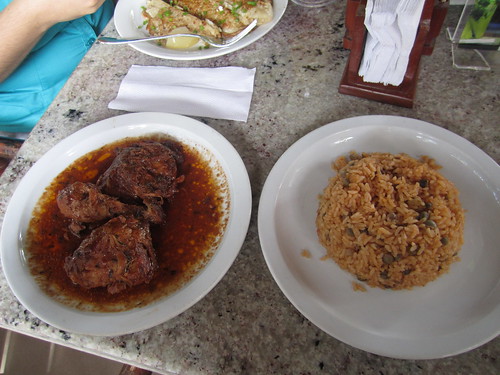

  • Visit your favorite restaurants and attractions before you leave

  • Update your journal

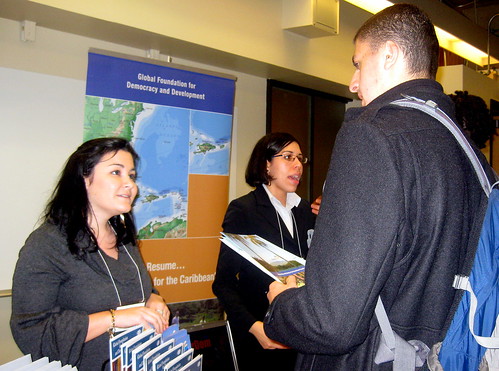
  • Attend Fairs and Information sessions to assist prospective students

  • Keep in contact with the friends you made while abroad


The Caribbean should be one of your top study abroad choices; there is no doubt that you would have a life changing experience. Keep in mind that other persons are always eager to hear about your study abroad experiences, so don’t be afraid to get involved with organizations or activities on campus after you return home to share them.

Friday, April 27, 2012

Why the Caribbean?

By: Ludonis Maule
Ludonis Maule is a senior at Baruch College majoring in Entrepreneurship Management with a minor in Spanish. She has worked at Baruch College’s Study Abroad Office for the past three years where she advises students on their study abroad options and procedures, she has also coordinated several of the office's Study Abroad Fairs. This spring 2012 semester she is interning at InteRDom in the Marketing department.


Choosing a study abroad destination can be a challenge; and you may ask yourself, "why the Caribbean?"

The Caribbean is commonly known for its impeccable scenery and beaches, however it is important to note that there is more to offer. The Caribbean has a culturally rich history to be enjoyed; the variation in languages and accents are also interesting to observe.


The first colony of the Americas, Christopher Columbus touched down in the Dominican Republic before any other shore, and established the first city and the first university—among other things—in the “New World.” The historical heritage and colonial history are still obvious in the country today—from architecture to cultural identities to race relations. A country rich in culture, the DR occupys two thirds of the island Hispaniola, which it shares with Haiti. Its booming tourism industry has made it a popular tourist attraction, but few people are aware of the accelerated economic development that the nation has experienced over the last 10-15 years. Its metropolitan areas are expanding and opportunities abound for students to make a contribution to the growing businesses looking to branch out into new areas and industries.


According to Dominicana Online, the country welcomes over three million visitors per year to its shores and it is known as the leading tourist destination in both the Central American and Caribbean region. With a variety of tourism models—from all-inclusive hotels to small boutiques to more sustainable eco-tourism initiatives—it is the perfect place for a student of tourism to study an industry leader. In addition to tourism, there are other sectors of the Dominican society which are appealing for students, including but not limited to: ecology and the environment, public health, urban planning, international relations, business and insurance.

Sports fanatics are not excluded. The Dominican Republic has also made a name for itself in the Baseball arena, with more Dominicans in Major League Baseball than any other nation outside of the United States. The Dominican Republic hosts baseball academies for dozens of teams and represents the Latin American recruitment hub for teams and the MLB headquarters alike.


The Dominican Republic offers an array of study and professional opportunities to students of virtually any area, so you should have no trouble finding an internship in your area of interest while immersing yourself in its unique culture.

Friday, April 13, 2012

Employability

By: Ludonis Maule
Ludonis Maule is a senior at Baruch College majoring in Entrepreneurship Management with a minor in Spanish. She has worked at Baruch College’s Study Abroad Office for the past three years where she advises students on their study abroad options and procedures, she has also coordinated several of the office's Study Abroad Fairs. This spring 2012 semester she is interning at InteRDom in the Marketing department.


Most employers appreciate students who are engaged in other positive activities outside of academics. International academics or work experience is also very appealing to employers. This international experience will be more valuable to a firm which operates worldwide. More than likely, you will have some knowledge about another country’s culture which may be useful for business. This increases your marketability as an employee.

A Global HR News study revealed that nearly three in four (73%) HR executives cited study abroad as an essential element when evaluating the resume of a potential job candidate for a junior-level position. According to Experience Inc., studying abroad is valued by employers because the individual is viewed as being:
  • Culturally aware

  • Flexible and tolerant

  • Sensitive to and accommodating of other cultures

  • Independent and Mature

Based on this information, an individual who studied abroad is already attributed qualities from the international experience listed on his/her resume even before they sell themselves verbally in the interview. This study abroad experience can be listed several places on your resume. It can be placed under educational experience including the school you attended, its location along with any course work completed. If the program has an internship component it can be listed under work experience.

Once your study abroad experience has been placed on your resume, you should be prepared to speak about it in an interview. Some interviewers will ask about it directly but others may not. However, you should try to incorporate your time abroad, the skills you acquired, the lessons you learned and the cultural sensitivity you developed into the interview in some way. It is important to emphasize that you did not just go overseas to have a good time, but you learned important things that are applicable to your professional life. For example, learning to think outside of the box, consider new and different viewpoints and be more independent and/or work in a team are all important skills you may have developed while abroad which should be emphasized.

As we all know, a great command of a second language is becoming even more vital to the globalized business world. Hence, the opportunity to study and speak the native language of another country should be seized in order to increase your professional marketability. While learning and practicing the language, you are inherently immersing yourself in a country’s culture. This is another reason why studying abroad is important; one has a better chance of experiencing and understanding a culture at its fullest when they are entirely immersed. We tend to be more appreciative and more open minded when we experience other cultures first-hand.

Studying abroad is not only a cultural experience, but it provides you with qualities which, if marketed properly, can be a major attraction for future employers.

Friday, March 30, 2012

Preparations

By: Ludonis Maule
Ludonis Maule is a senior at Baruch College majoring in Entrepreneurship Management with a minor in Spanish. She has worked at Baruch College’s Study Abroad Office for the past three years where she advises students on their study abroad options and procedures, she has also coordinated several of the office's Study Abroad Fairs. This spring 2012 semester she is interning at InteRDom in the Marketing department.

Imagine waking up to warm, beaming sunshine rays, fresh morning breeze and the sound of the waves beating against the shore. You hurry out of bed, get dressed and head to school. This is the first day of classes and your internship. You met some of your classmates at the program's orientation a few days ago, the excitement you feel reminds you of your first day of college all over again.

On your way through the school’s gates you are greeted by your new friend who offers you breakfast prepared by her mother. You both hurry to class to begin your first day at school; this should be a great. This could be the beginning of the paper you write recounting your perfect study abroad experience.

Studying abroad is a valuable and fulfilling part of college life. It is not only a great asset to your marketability as an employee, but it also gives you the opportunity to experience academic life in another environment while immersing yourself in a foreign culture.

In order to make this experience a success, planning is vital. This process can take up to a year depending on the length of your study abroad program. One of the first and perhaps the most critical step in the planning process is deciding what are your main reasons for wanting to study abroad. These are a few things which can be taken into consideration when determining your reasons for studying abroad.
• Major or field of concentration
• Career goals
• Language ability
• Cultural/Heritage connection

You can begin your search for the ideal program on your school's website or office, most schools have study abroad or International Education offices which you should visit to get more information about the procedures and policies at your school.The Study Abroad/ International Office should also be able to provide you with information about scholarships offered through your school. National scholarships are available for study abroad purposes; with a little research, you should find scholarship information which will be helpful. Another way to obtain information about studying abroad is to visit academic campus fairs. Many schools have going/study abroad fairs or International Education weeks where you can obtain information about opportunities readily available to you. In many cases, they may even have individuals who went on various programs at the fair. This is a great opportunity for you to get first hand information from an actual recipient.

Obtaining college credits may be just as important for some as is financing. It is of utmost importance that you find out from the respective office at your school, the procedure of obtaining credit for your study abroad. You want to ensure that the credits or grades you receive will be included on your transcript when you have completed the program.

Deciding your reasons for going abroad, visiting the respective offices at your school and doing some online research provides the surety that you are well on your way to planning a life changing study abroad experience.